Sovereign Bureau Registry
Frameworks
Frameworks are admitted to the archive only when structurally complete. Partial models are not published.
Featured Frameworks
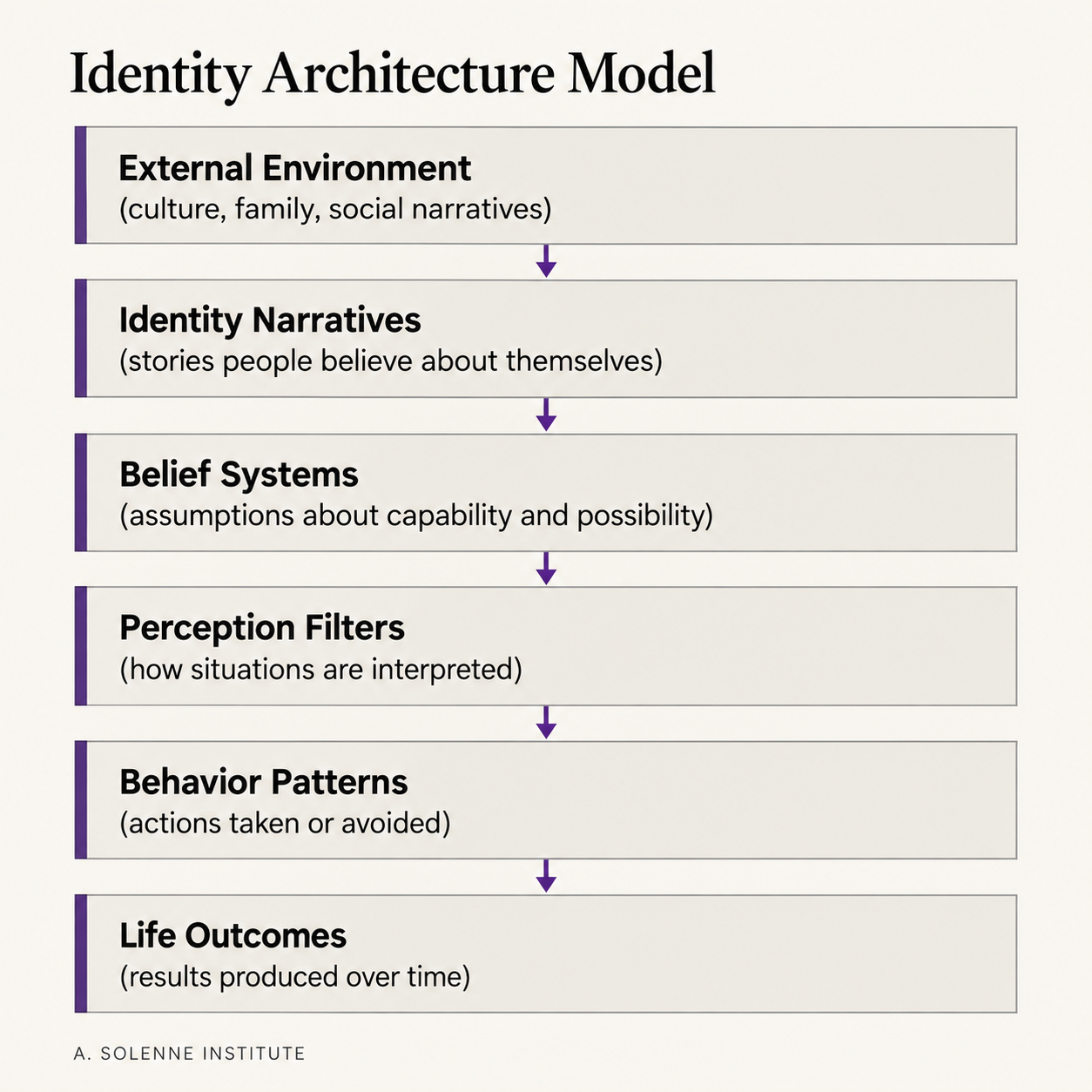
Identity Architecture Model
A model explaining how inherited belief systems and self-schemas function as the primary perceptual lens through which all experience is filtered, shaping what outcomes appear possible before any decision is made.
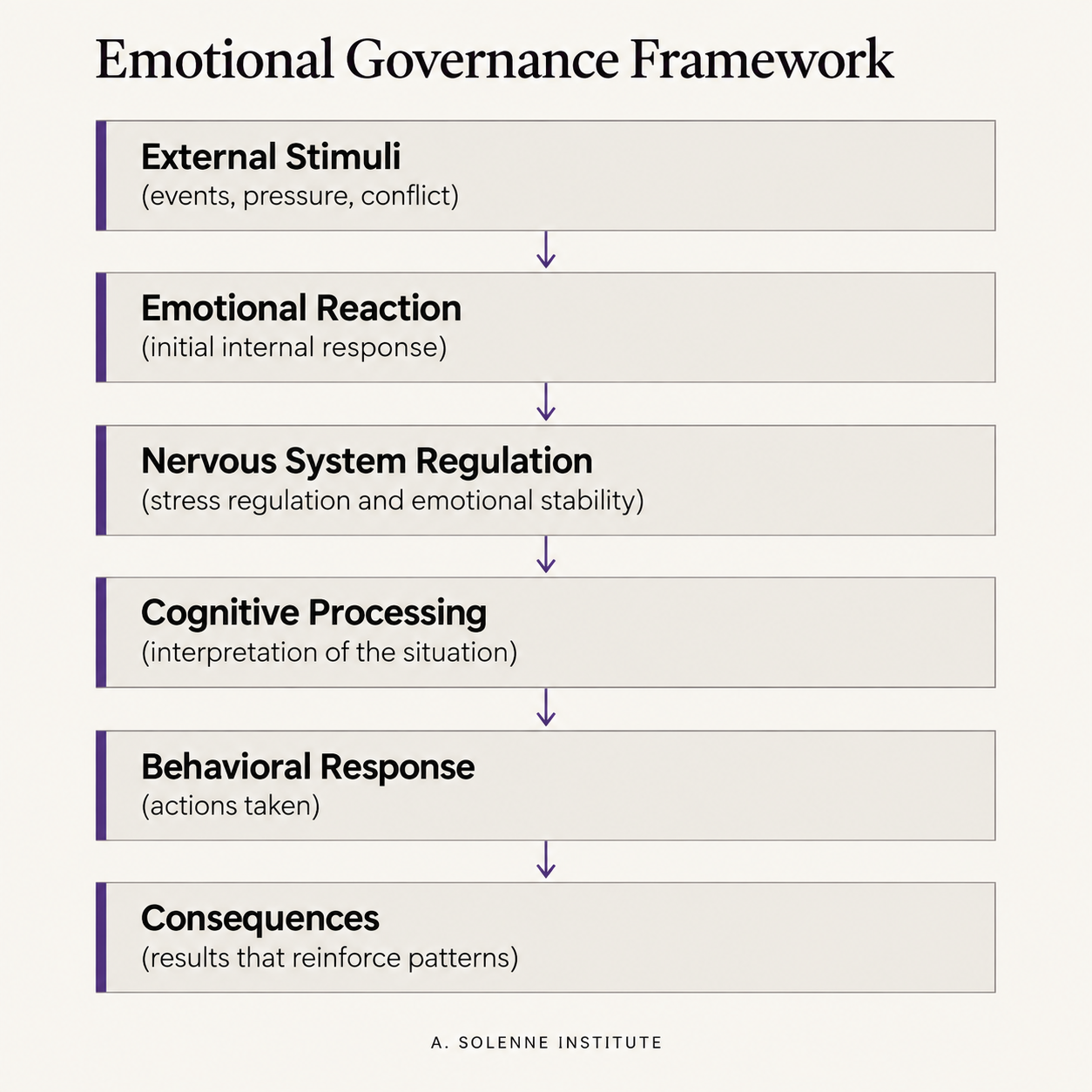
Emotional Governance Framework
A model explaining how emotional regulation and nervous system stability shape behavior and decision-making. Behavioral consistency is not a character trait. It is a nervous system state.
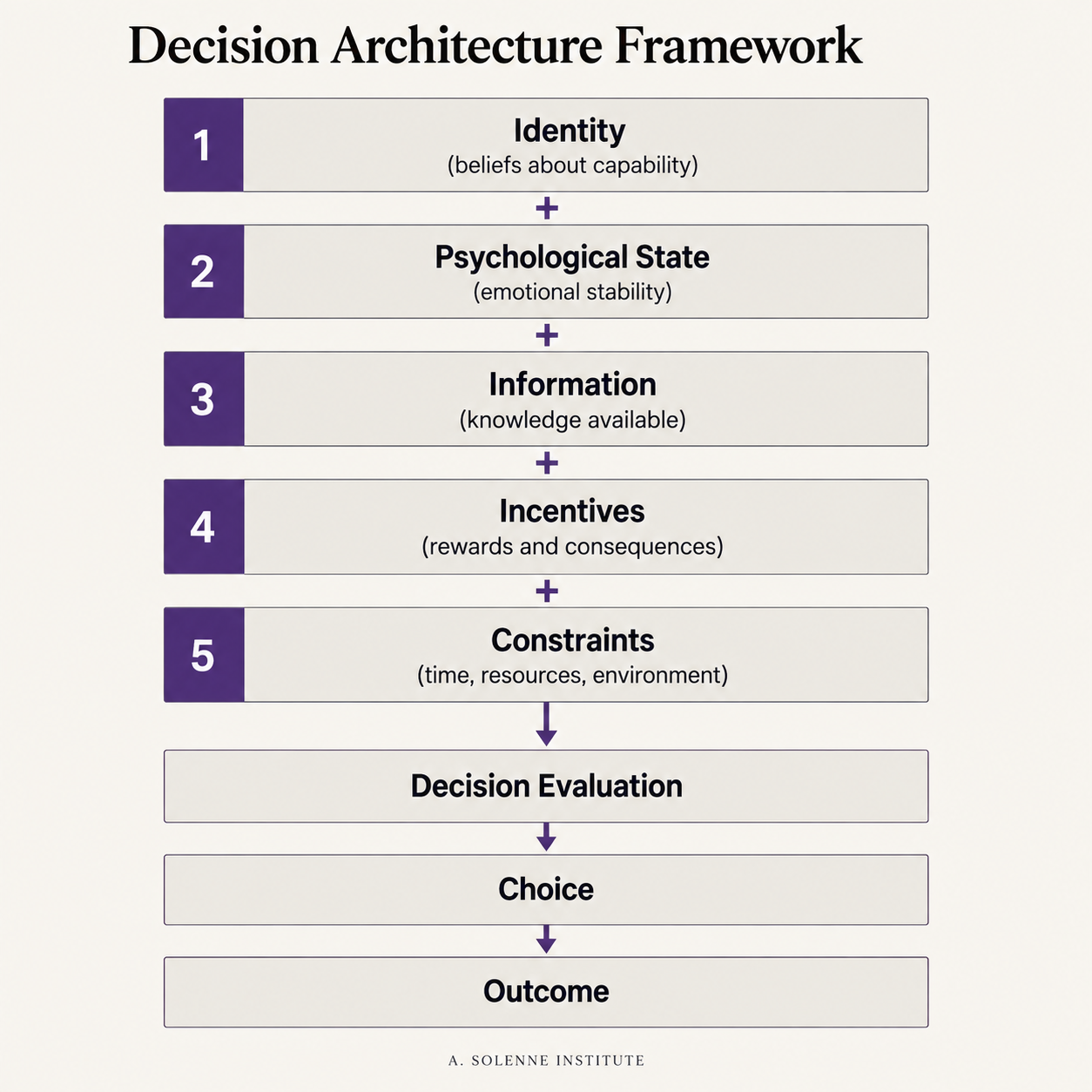
Decision Architecture Framework
A model showing that decisions emerge from an integrated field of forces before deliberation begins. The field of a decision shapes its outcome before any conscious reasoning engages.
Complete Archive
Upcoming Research Areas
Research Area
Identity Systems
In Research
Research Area
Behavior Systems
In Research
Research Area
Decision Systems
In Research
Research Area
Economic Systems
In Research
Framework 01
The Perceptual Architecture Model
Identity Formation and Structural Self-Concept
The self is not a fact. It is a construction. And every construction follows a blueprint.
Identity is not a fixed attribute that individuals possess. It is a dynamic architecture that they build, revise, and inhabit. This framework examines how individuals construct their sense of self through the interaction of inherited belief systems, relational experiences, cultural narratives, and deliberate self-authorship. The resulting identity structure does not merely describe who a person is. It functions as the primary perceptual lens through which all subsequent experience is filtered and interpreted.
Research across cognitive, developmental, and personality psychology confirms that self-schemas, the internal representations individuals hold about their own traits, capacities, and roles, operate as active governors of perception, memory, and ambition. What a person believes about who they are determines which experiences register as relevant, which possibilities appear viable, and what risks feel tolerable. This is not an abstract claim. It is a mechanistic description of how identity functions as infrastructure.
The Perceptual Architecture Model addresses identity formation across all major life transitions, with particular attention to the process of self-authorship: the developmental capacity to construct an internal belief system no longer dependent on external authority. It is within this framework that questions of inherited identity, perceptual constraint, and conscious identity redesign are most rigorously examined.
Core Focus Areas
Inherited Identity Structures
How early relational and cultural environments establish baseline self-schemas that persist into adulthood.
Self-Authorship
The developmental progression from externally defined to internally governed identity construction.
Identity Transitions
The structural disruption and reconsolidation of self-concept during major life and role changes.
Perceptual Constraint
How identity architecture narrows or expands the range of outcomes an individual considers possible.
Research Anchors Self-Schema Theory (Markus, 1977); Narrative Identity Framework (McAdams, 1985, 2013); Self-Authorship Theory (Baxter Magolda); Identity Status Paradigm (Marcia, 1966).
Licensing & Use Cases
View FrameworkA. Solenne Institute · The Sovereign Bureau
Framework 02
The Regulatory Intelligence Framework
Psychology, Emotional Governance, and Nervous System Stability
Behavioral consistency is not a character trait. It is a nervous system state.
The capacity to act with intentionality, sustain effort, and maintain behavioral consistency across varying conditions is not fundamentally a function of motivation or discipline. It is a function of the regulatory state of the underlying psychological and physiological system. Emotional governance refers to the sophistication with which an individual manages the internal environment from which behavior emerges: the interplay of nervous system state, emotional arousal, threat response patterns, and the executive capacity to remain deliberate under pressure.
When regulatory systems are dysregulated, whether through chronic stress, unprocessed threat activation, or depleted regulatory resources, access to higher-order cognition narrows. The gap between intention and action widens. What an individual knows they should do and what they actually do diverge not because of a character deficit but because the system producing behavior is not in a state that supports aligned action.
This framework draws extensively from autonomic neuroscience, including Polyvagal Theory and its implications for the relationship between physiological state and psychological capacity. It also addresses emotional discipline as a trainable, architecturally shapeable skill rather than an innate trait. The regulatory system is not fixed. It is responsive. This framework maps the conditions under which it can be deliberately developed.
Core Focus Areas
Emotional Regulation
The cognitive and physiological mechanisms by which individuals modulate emotional states in response to internal and external demands.
Autonomic Stability
The role of nervous system state in determining behavioral range, decision quality, and social engagement capacity.
Stress Response Architecture
How habituated patterns of threat response shape behavior across contexts and over time.
Emotional Discipline
The deliberate cultivation of regulatory capacity as a structural skill, distinct from suppression or avoidance.
Research Anchors Polyvagal Theory (Porges, 1994; Frontiers in Behavioral Neuroscience, 2025); Emotion Regulation and Executive Function Research; Autonomic Regulation and Behavioral Flexibility.
Licensing & Use Cases
View FrameworkA. Solenne Institute · The Sovereign Bureau
Framework 03
The Decision Field Model
Decision Science, Cognitive Architecture, and Choice Behavior
The field of a decision shapes its outcome before any deliberation begins.
Decision-making is not a discrete event. It is an emergent output of an integrated system comprising identity assumptions, emotional and physiological state, environmental context, cognitive load, and deeply habituated pattern recognition. Understanding any decision requires mapping the field in which it occurs, not merely examining the moment of apparent choice.
The dual-process literature demonstrates that the vast majority of human decisions originate from fast, automatic, and largely unconscious processes rather than deliberate analytical reasoning. The subjective experience of conscious choice is, in many cases, a post-hoc construction. What appears as an autonomous decision is frequently the surface expression of a system that had already reached a conclusion.
The Decision Field Model examines how individuals construct and inhabit decision environments, how risk perception is shaped by framing and identity, how attention allocation determines which options become visible, and how tradeoff evaluation is systematically distorted by cognitive biases. It provides analytical tools for mapping the full architecture of any decision system.
Core Focus Areas
Perceived Risk
How risk tolerance is shaped by identity architecture, regulatory state, and framing rather than objective probability.
Information Framing
The structural influence of presentation, context, and language on how choices are evaluated before deliberation.
Attention Allocation
How the direction and quality of attention determines which decision possibilities are recognized and pursued.
Tradeoff Evaluation
The cognitive and emotional mechanisms underlying how individuals weigh competing options across time horizons.
Research Anchors Kahneman, D. (2011), Thinking, Fast and Slow; Prospect Theory (Kahneman and Tversky, 1979); Dual Process Theory (Stanovich and West); Attentional Engagement and Decision Architecture (Organization Science, 2019).
Licensing & Use Cases
View FrameworkA. Solenne Institute · The Sovereign Bureau
Framework 04
The Constraint Economics Model
Economic Behavior, Incentive Systems, and Financial Psychology
Behavior follows incentive structure. What a person does reveals the economy they are actually operating in.
Human action does not follow stated values. It follows perceived incentive structures. The gap between what individuals report valuing and what they actually prioritize in behavior is not primarily a gap of character. It is a gap of incentive architecture. Economic and social forces, including financial rewards, loss aversion effects, opportunity cost calculations, and social status incentives, exert systematic and often invisible pressure on behavior even when individuals are consciously committed to different outcomes.
This framework applies the analytical tools of behavioral economics and financial psychology to the study of how individuals allocate scarce resources: not only money, but attention, time, cognitive capacity, and relational investment. Scarcity, whether real or perceived, activates distinct cognitive patterns that distort decision quality in predictable and mappable ways.
The Constraint Economics Model also addresses the psychological relationship individuals hold with wealth, capital, and financial identity. How a person conceptualizes their economic position, their access to resources, and their capacity to generate financial outcomes is not separable from their behavior in those domains. This framework treats financial psychology as an extension of identity and regulatory architecture rather than a separate domain.
Core Focus Areas
Economic Incentive Structures
How reward systems, penalties, and social incentives shape behavior regardless of stated intentions.
Capital Allocation
The psychological drivers of how individuals distribute finite resources across competing demands.
Opportunity Cost Recognition
The cognitive capacity to perceive and weight foregone alternatives in decision-making.
Financial Psychology
How identity architecture, scarcity mindset, and loss aversion shape an individual's relationship with wealth and economic behavior.
Research Anchors Prospect Theory and Loss Aversion (Kahneman and Tversky, 1979); Nudge Theory (Thaler and Sunstein, 2008); Scarcity and Cognitive Bandwidth (Mullainathan and Shafir, 2013).
Licensing & Use Cases
View FrameworkA. Solenne Institute · The Sovereign Bureau
Framework 05
The Authority Topology Framework
Leadership Psychology, Power Perception, and Organizational Influence
Authority is not a position. It is a perception. And perception is governed by architecture.
Authority is not conferred by title or role alone. It is constructed through the dynamic interaction of power perception, behavioral signaling, relational positioning, and the psychological readiness of followers to grant or withdraw legitimacy. This framework examines the full topology of authority as it operates in organizational, interpersonal, and social systems: how it is established, how it is challenged, how it erodes, and how it can be exercised with both structural force and psychological intelligence.
Research on organizational power dynamics demonstrates that authority is a profoundly psychological phenomenon. The same formal position produces radically different behavioral outcomes depending on how it is perceived, what signals accompany it, and the regulatory state of those it attempts to lead. Influence does not simply flow from rank.
This framework gives particular attention to composure under pressure, the perception of competence and certainty, influence through framing rather than force, and the psychology of resistance and compliance. Authority over one's own behavior is examined within this framework as a domain of psychological skill in its own right.
Core Focus Areas
Leadership Composure
The psychological and physiological conditions that produce the behavioral signals associated with perceived authority.
Power Perception
How individuals evaluate, assign, and revoke legitimacy in organizational and interpersonal contexts.
Influence Architecture
The structural design of conditions that reliably produce compliance, collaboration, or resistance.
Organizational Behavior
How power dynamics shape communication patterns, decision processes, and institutional culture.
Research Anchors French and Raven (1959), Bases of Social Power; Power Distance Research (Hofstede); Transformational and Transactional Leadership (Bass, 1995); Four Faces of Power in Organizations (Fleming and Spicer, 2014).
Licensing & Use Cases
View FrameworkA. Solenne Institute · The Sovereign Bureau
Framework 06
The Reflective Cognition Model
Metacognition, Cognitive Awareness, and Belief Revision
The quality of thinking is determined by the quality of attention brought to the act of thinking itself.
Metacognition, the capacity to monitor, evaluate, and regulate one's own cognitive processes, is one of the most consequential and least systematically developed capacities in human functioning. Individuals with sophisticated metacognitive ability are able to recognize the operation of cognitive biases, adjust reasoning strategies in response to error, revise beliefs in the presence of contradicting evidence, and sustain deliberate analytical engagement under conditions of complexity and pressure.
This framework examines reflective cognition as a structured domain of psychological skill: one that can be mapped, assessed, and deliberately developed. It draws from cognitive psychology research on metacognitive monitoring and control, dual-process theory's account of when and why System 2 reasoning is engaged or bypassed.
This framework distinguishes between the awareness of one's cognitive state and the capacity to act on that awareness. Knowing that a bias is operating and successfully redirecting the cognitive process are not the same skill. The Reflective Cognition Model addresses both dimensions and the conditions under which they diverge.
Core Focus Areas
Cognitive Bias Recognition
The structured identification of systematic errors in perception, reasoning, and judgment.
Metacognitive Monitoring
The ongoing evaluation of one's own reasoning quality, confidence calibration, and epistemic accuracy.
Reflective Thinking
The deliberate examination of belief structures, assumptions, and inferential habits.
Belief Revision
The psychological processes and conditions that allow or inhibit the updating of established beliefs in response to new evidence.
Research Anchors Metacognition and Sense of Agency (ScienceDirect, 2023); npj Science of Learning, Metacognition Research (2021); Fleming and Dolan, Metacognitive Ability Research.
Licensing & Use Cases
View FrameworkA. Solenne Institute · The Sovereign Bureau
Framework 07
The Strategic Focus Framework
Attention Management, Strategic Clarity, and Resource Allocation
Strategy is not a plan. It is a discipline of directed attention applied consistently over time.
Strategic capacity does not emerge from the quality of a plan. It emerges from the quality and consistency of attention management over time. Where an individual or system directs cognitive and behavioral resources, what it selects out, what it deprioritizes, and how it sustains focus in the presence of competing demands, determines the quality of strategic outcomes far more reliably than the sophistication of any stated objective.
This framework examines attention as a finite, strategically deployable resource with measurable effects on outcome quality. Research on attentional engagement demonstrates that how individuals frame problems, the cognitive strategies they apply to prioritization, and the degree of sustained focus they bring to consequential activity directly predict strategic effectiveness.
The Strategic Focus Framework provides analytical tools for mapping current attention distribution, identifying misalignments between stated priorities and actual resource allocation, and designing environments that support sustained strategic clarity. It also addresses the psychology of opportunity selection: how identity architecture, risk orientation, and cognitive bias shape which options appear worth pursuing before deliberate analysis begins.
Core Focus Areas
Strategic Clarity
The precision with which an individual identifies high-leverage activities and maintains alignment between values, priorities, and actions.
Opportunity Selection
The psychological and cognitive processes governing which possibilities are recognized and pursued.
Attention Management
The deliberate governance of cognitive focus as a finite and consequential resource.
Long-Term Planning
The structural conditions that support goal persistence, strategic sequencing, and deferred outcome evaluation.
Research Anchors Attention-Based View of the Firm (Ocasio, 1997); Attentional Engagement and Problem-Solving Strategy (Organization Science, 2019); Goal-Setting Theory (Locke and Latham).
Licensing & Use Cases
View FrameworkA. Solenne Institute · The Sovereign Bureau
Framework 08
The Integrated Systems Architecture
Interdisciplinary Synthesis and Unified Human Behavior Modeling
The whole person cannot be understood through any single discipline. They must be mapped as a system.
Human functioning cannot be adequately explained within the boundaries of any single academic discipline. Psychology illuminates internal architecture but cannot fully account for economic behavior. Neuroscience maps physiological substrates but does not independently explain social dynamics. Philosophy clarifies assumptions but requires empirical grounding. Economics captures incentive logic but operates on simplified models of motivation. Each discipline offers a partial map. None offers a complete one.
The Integrated Systems Architecture is the meta-framework of the institute: the theoretical structure within which all other frameworks are positioned and related to one another. It provides the interdisciplinary scaffolding for understanding how identity, regulation, decision systems, authority dynamics, environmental influence, and personal capacity interact and reinforce each other across the full range of human experience.
This framework draws from systems theory, the biopsychosocial model, complexity science, and the rapidly expanding field of interdisciplinary behavioral research. It treats the human being not as a set of separable subsystems but as an integrated, self-organizing system whose outputs can only be understood by examining the interactions among its structural components.
Core Focus Areas
Cross-Disciplinary Integration
The synthesis of psychological, economic, neuroscientific, and philosophical frameworks into a coherent account of human behavior.
Systemic Influence Patterns
How forces operating across multiple domains compound, amplify, or counteract one another within the human system.
Structural Awareness
The capacity to identify and examine the invisible forces shaping perception, decision, and behavior from the inside.
Unified Behavioral Modeling
The development of analytical frameworks that account for the full complexity of human functioning without reductionism.
Research Anchors Biopsychosocial Model (Engel, 1977); Systems Theory Applications in Behavioral Psychology; Complexity Theory in Human Systems (Stacey); General Systems Theory (von Bertalanffy).
Licensing & Use Cases
View FrameworkA. Solenne Institute · The Sovereign Bureau
Framework 09
The Contextual Field Model
Environmental Psychology, Social Context, and Behavioral Architecture
Behavior is not independent of context. It is, in large part, produced by it.
The context in which choices are presented exerts measurable and often decisive influence over the choices that are made. Social expectations, cultural narratives, physical environments, institutional structures, and economic conditions all shape how individuals evaluate their options before deliberate reasoning engages. These contextual forces operate continuously, invisibly, and with predictable effects on behavior.
This framework examines the full range of environmental influences on behavior and decision architecture. It provides analytical tools for mapping the contextual forces operating in any given behavioral field: the social norms that govern what appears acceptable, the cultural narratives that determine what appears possible, the economic conditions that shape what appears affordable, and the physical environments that structure what appears convenient.
The Contextual Field Model also addresses choice architecture, the deliberate design of environments to influence behavior without altering available options, as a structural intervention strategy. Understanding environment as a behavioral force rather than a neutral backdrop is a prerequisite for any serious analysis of why individuals behave as they do.
Core Focus Areas
Cultural Narratives
The shared stories, assumptions, and frameworks a culture provides that shape what individuals consider possible or legitimate.
Social Expectations
How perceived norms, roles, and relational demands govern behavior through anticipated approval and disapproval.
Environmental Incentives
The structural rewards and costs embedded in physical and social contexts that shape behavior before conscious deliberation.
Contextual Decision Framing
How the design of choice environments systematically shapes decision outcomes independent of individual preference.
Research Anchors Choice Architecture (Thaler and Sunstein, 2008); Environmental Psychology (Fischer); Social Determinants of Behavior; Behavioral Nudge Theory.
Licensing & Use Cases
View FrameworkA. Solenne Institute · The Sovereign Bureau
Framework 10
The Pattern Recognition Framework
Systems Thinking, Feedback Dynamics, and Structural Pattern Identification
A repeated outcome is not a coincidence. It is the system reporting its own design.
Human experience frequently appears unpredictable at the level of individual events. Examined at the level of underlying systems, however, recurring patterns emerge with reliable consistency. Repeated behavioral outcomes, recurring emotional responses, persistent relational dynamics, and cyclical decision patterns are not random. They are structural outputs: the product of identity architecture, regulatory states, environmental conditions, and habituated cognitive processes operating in combination.
This framework provides systematic tools for identifying, analyzing, and intervening in the structural patterns that produce recurring outcomes. It draws from systems theory's account of feedback loops, both reinforcing and balancing, and applies these concepts to the analysis of individual behavior, interpersonal dynamics, and organizational culture.
The Pattern Recognition Framework is particularly relevant to any analysis of why change efforts fail. Most behavioral change interventions operate at the level of individual events or conscious intentions without addressing the structural conditions that generate the pattern being changed. This framework redirects attention to those conditions.
Core Focus Areas
Pattern Recognition
The analytical capacity to identify structural regularities beneath apparently random or isolated behavioral events.
Feedback Loop Dynamics
How reinforcing and balancing feedback mechanisms amplify or constrain behavioral patterns over time.
Systemic Behavior Patterns
The recurring outcomes produced by stable configurations of identity, regulation, environment, and habit.
Structural Intervention Points
The leverage points within a system where targeted change produces disproportionate impact on behavioral patterns.
Research Anchors Systems Thinking and Feedback Dynamics (Senge, The Fifth Discipline); Habit Formation Research (Wood and Neal, 2007); Complexity Theory Applications in Behavioral Science.
Licensing & Use Cases
View FrameworkA. Solenne Institute · The Sovereign Bureau
Framework 11
The Sovereign Mind Model
Philosophical Self-Governance, Autonomy, and Internal Authority
Internal authority is not the absence of external influence. It is the capacity to govern oneself in its presence.
Self-governance is not achieved by eliminating external influence. It is achieved by developing a sufficiently robust internal authority structure that can engage with external forces without being governed by them. This framework examines the philosophical and psychological conditions under which individuals develop genuine autonomy: the capacity to form, sustain, and act from beliefs and values that are authentically their own rather than absorbed uncritically from authority figures, cultural narratives, or social pressure.
The philosophical tradition bearing most directly on this framework extends from Kantian moral autonomy through Nietzsche's account of the sovereign individual as one who has developed a memory of the will sufficient to make and keep commitments independent of external sanction. Contemporary psychological research on self-determination theory and epistemic autonomy grounds these philosophical claims in empirical findings.
The Sovereign Mind Model examines self-trust as a structural capacity rather than a disposition, intellectual independence as a developed skill rather than a personality trait, and decision ownership as a practice that requires both philosophical clarity and regulatory stability to sustain.
Core Focus Areas
Self-Trust
The structural and psychological conditions under which individuals develop reliable confidence in their own judgment.
Intellectual Independence
The capacity to form, hold, and revise beliefs on the basis of evidence and reasoning rather than social conformity.
Decision Ownership
The psychological practice of making and sustaining commitments in full awareness of their costs and consequences.
Epistemic Sovereignty
The philosophical and psychological foundation for governing one's own belief formation independent of external authority.
Research Anchors Self-Determination Theory (Deci and Ryan); Philosophical Models of Personal Autonomy (Essex Autonomy Project, 2012); Stanford Encyclopedia of Philosophy, Autonomy entry.
Licensing & Use Cases
View FrameworkA. Solenne Institute · The Sovereign Bureau
Framework 12
The Capacity Expansion Model
Cognitive Growth, Neuroplasticity, and Long-Term Human Development
Capacity is not fixed at birth or finalized in adolescence. It is a variable that responds to architecture.
The prevalent cultural model of human capacity as a relatively fixed endowment is empirically inaccurate. Cognitive, emotional, and behavioral capacity are dynamic variables that respond throughout adulthood to the conditions individuals create and inhabit. Neuroplasticity research confirms that the brain retains significant adaptive capacity across the lifespan: the ability to reorganize structurally and functionally in response to experience, deliberate practice, and environmental demand.
This framework examines the structural conditions that support or inhibit the expansion of human capacity over time. It draws from cognitive neuroscience research on neuroplasticity, learning systems research on the conditions that produce durable skill acquisition, resilience science on the neurocognitive mechanisms underlying adaptive functioning under adversity.
The Capacity Expansion Model addresses deliberate cognitive renewal as a practice: the structured engagement in activities that challenge existing processing patterns and build new cognitive infrastructure. It also examines the role of regulatory stability as a prerequisite for capacity development and the conditions under which resilience is developed rather than merely hoped for.
Core Focus Areas
Neuroplasticity and Behavioral Change
The mechanisms by which deliberate experience produces structural and functional changes in cognitive architecture.
Resilience Development
The neurocognitive conditions that support adaptive functioning and recovery of capacity under conditions of adversity.
Learning Systems
The structural conditions that produce durable skill acquisition, belief revision, and cognitive pattern change.
Long-Term Capacity Building
The sustained developmental practices that expand cognitive, emotional, and strategic range over time.
Research Anchors Neuroplasticity and Behavioral Modification (Preprints.org, 2025); Neuromarkers of Adaptive Neuroplasticity (MDPI, 2026); Neurocognitive Mechanisms of Human Resilience (PMC); Deliberate Practice Research (Ericsson).
Licensing & Use Cases
View FrameworkA. Solenne Institute · The Sovereign Bureau
Framework 13
The Temporal Orientation Model
Time Psychology, Future-Self Identity, and Temporal Decision Architecture
Every decision carries an embedded relationship to time. That relationship, more than the decision itself, predicts its outcome.
How individuals perceive and relate to time, their habitual orientation toward the past, present, and future, constitutes a largely invisible but structurally significant determinant of behavior. Time perspective theory demonstrates that individuals differ systematically in their temporal orientations and that these differences predict goal formation, risk tolerance, delay of gratification, decision quality, and the capacity to sustain long-term behavioral commitments. These are not personality quirks. They are structural parameters of the decision system.
This framework addresses temporal orientation as a domain of human architecture that intersects directly with identity (how the future self is conceptualized and valued), regulatory functioning (whether present discomfort is evaluated against future benefit), and decision field dynamics. A person who cannot genuinely imagine a continuous relationship between their present self and their future self will systematically underinvest in long-term outcomes regardless of stated intentions. This is a structural problem, not a motivational one.
The Temporal Orientation Model was added following the research review process. It addresses the dimension of time as a structural variable in human systems, completing the analytical architecture by addressing not only who a person is and how they regulate and decide, but when they are oriented toward.
Core Focus Areas
Time Perspective Orientation
The habitual temporal frame, past, present, or future, from which an individual predominantly evaluates experience and makes decisions.
Future-Self Identity
The psychological relationship between current identity and the imagined future self, and how the quality of that relationship governs long-term behavioral investment.
Temporal Coherence
The degree to which past, present, and future are integrated into a psychologically continuous and consistent self-narrative.
Goal Persistence and Delay Tolerance
How temporal orientation shapes the capacity to sustain commitment to goals whose rewards are deferred in time.
Research Anchors Time Perspective Theory (Zimbardo and Boyd, 1999); Zimbardo Time Perspective Inventory (ZTPI); Future Self Continuity Research; Temporal Self-Appraisal (ScienceDirect, 2025).
Licensing & Use Cases
View FrameworkA. Solenne Institute · The Sovereign Bureau
Framework 14
The Applied Intelligence Model
Information Processing, Cognitive Translation, and Operational Intelligence
Information that cannot be translated into action is not intelligence. It is inventory.
The acquisition of information is not equivalent to the development of understanding. Understanding is not equivalent to operational capacity. These are three distinct stages in a conversion sequence that most frameworks treat as a single event. The failure to complete that sequence is among the most common and consequential structural problems in human cognitive functioning. Individuals encounter relevant information and do not integrate it. They develop genuine understanding and do not act on it. They accumulate significant conceptual knowledge that produces no behavioral change. This framework identifies the structural conditions at which each conversion breaks down.
The Applied Intelligence Model examines the conversion sequence through which raw information becomes structured understanding, and structured understanding becomes usable cognitive capacity. Its subject is not knowledge acquisition or information access. It is the architecture of translation: the specific mechanisms by which what an individual encounters, reads, studies, or is told either becomes operational intelligence or fails to. What produces operational intelligence is the successful movement through each stage of the conversion architecture, under the right cognitive and regulatory conditions, with sufficient schema compatibility to allow genuine integration.
Within the broader Human Systems architecture, this framework is the capstone. The preceding thirteen frameworks map the structural forces governing human systems. The Applied Intelligence Model addresses what it takes to convert that structural understanding into intelligence that can be deployed. It closes the loop the meta-framework opens, addressing how structural understanding itself becomes operational.
Core Focus Areas
Information Processing and Filtration
How incoming information is received and filtered through existing schemas, and either integrated or discarded based on identity architecture and cognitive state.
Interpretive Structuring
The process by which filtered information is organized into coherent patterns of meaning that allow for informed inference and judgment.
Understanding to Capacity Conversion
The mechanisms by which structured understanding is translated into usable cognitive capacity, including revised behavioral defaults and expanded perceptual range.
Operational Intelligence
The applied form of intelligence: the capacity to perceive accurately, reason structurally, and act with precision across conditions of complexity and uncertainty.
Licensing & Use Cases
View FrameworkA. Solenne Institute · The Sovereign Bureau
The Perceptual Architecture Model
Choose Your License
Select the license type that reflects your intended use of this framework. Each license grants distinct permissions and carries distinct terms. Not all license types are available for every framework.
License
Personal Study
For private learning, self-application, and personal reflection. This license does not confer client-use, practitioner, or resale rights.
$555
Review Personal Study LicenseLicense
Practitioner
For private use with clients, students, or participants. Permits guided application within your professional practice.
$1,500
Review Practitioner LicenseInquiry Only
Institutional
For organizations, programs, schools, departments, or teams. Custom terms and scope are determined by inquiry.
Starts at $10,000
Custom scope. Inquiry required.
Submit InquiryThe Sovereign Bureau · A. Solenne Institute
The Regulatory Intelligence Framework
Choose Your License
Select the license type that reflects your intended use of this framework. Each license grants distinct permissions and carries distinct terms. Not all license types are available for every framework.
License
Personal Study
For private learning, self-application, and personal reflection. This license does not confer client-use, practitioner, or resale rights.
$555
Review Personal Study LicenseLicense
Practitioner
For private use with clients, students, or participants. Permits guided application within your professional practice.
$1,500
Review Practitioner LicenseLicense
Founder / Operator
For use inside your own business, brand, team, operating system, or decision infrastructure.
$2,500
Review Founder / Operator LicenseInquiry Only
Institutional
For organizations, programs, schools, departments, or teams. Custom terms and scope are determined by inquiry.
Starts at $10,000
Custom scope. Inquiry required.
Submit InquiryThe Sovereign Bureau · A. Solenne Institute
The Decision Field Model
Choose Your License
Select the license type that reflects your intended use of this framework. Each license grants distinct permissions and carries distinct terms. Not all license types are available for every framework.
License
Personal Study
For private learning, self-application, and personal reflection. This license does not confer client-use, practitioner, or resale rights.
$555
Review Personal Study LicenseLicense
Practitioner
For private use with clients, students, or participants. Permits guided application within your professional practice.
$1,500
Review Practitioner LicenseLicense
Founder / Operator
For use inside your own business, brand, team, operating system, or decision infrastructure.
$2,500
Review Founder / Operator LicenseInquiry Only
Institutional
For organizations, programs, schools, departments, or teams. Custom terms and scope are determined by inquiry.
Starts at $10,000
Custom scope. Inquiry required.
Submit InquiryThe Sovereign Bureau · A. Solenne Institute
The Constraint Economics Model
Choose Your License
Select the license type that reflects your intended use of this framework. Each license grants distinct permissions and carries distinct terms. Not all license types are available for every framework.
License
Personal Study
For private learning, self-application, and personal reflection. This license does not confer client-use, practitioner, or resale rights.
$555
Review Personal Study LicenseLicense
Practitioner
For private use with clients, students, or participants. Permits guided application within your professional practice.
$1,500
Review Practitioner LicenseLicense
Founder / Operator
For use inside your own business, brand, team, operating system, or decision infrastructure.
$2,500
Review Founder / Operator LicenseInquiry Only
Institutional
For organizations, programs, schools, departments, or teams. Custom terms and scope are determined by inquiry.
Starts at $10,000
Custom scope. Inquiry required.
Submit InquiryThe Sovereign Bureau · A. Solenne Institute
The Authority Topology Framework
Choose Your License
Select the license type that reflects your intended use of this framework. Each license grants distinct permissions and carries distinct terms. Not all license types are available for every framework.
Inquiry Only
Personal Study
Personal study access for this framework is available by inquiry. Scope and terms are confirmed before access is granted.
Inquiry Required
Availability is determined individually.
Submit InquiryLicense
Practitioner
For private use with clients, students, or participants. Permits guided application within your professional practice.
$1,500
Review Practitioner LicenseLicense
Founder / Operator
For use inside your own business, brand, team, operating system, or decision infrastructure.
$2,500
Review Founder / Operator LicenseInquiry Only
Institutional
For organizations, programs, schools, departments, or teams. Custom terms and scope are determined by inquiry.
Starts at $10,000
Custom scope. Inquiry required.
Submit InquiryThe Sovereign Bureau · A. Solenne Institute
The Reflective Cognition Model
Choose Your License
Select the license type that reflects your intended use of this framework. Each license grants distinct permissions and carries distinct terms. Not all license types are available for every framework.
License
Personal Study
For private learning, self-application, and personal reflection. This license does not confer client-use, practitioner, or resale rights.
$555
Review Personal Study LicenseLicense
Practitioner
For private use with clients, students, or participants. Permits guided application within your professional practice.
$1,500
Review Practitioner LicenseInquiry Only
Institutional
For organizations, programs, schools, departments, or teams. Custom terms and scope are determined by inquiry.
Starts at $10,000
Custom scope. Inquiry required.
Submit InquiryThe Sovereign Bureau · A. Solenne Institute
The Strategic Focus Framework
Choose Your License
Select the license type that reflects your intended use of this framework. Each license grants distinct permissions and carries distinct terms. Not all license types are available for every framework.
License
Personal Study
For private learning, self-application, and personal reflection. This license does not confer client-use, practitioner, or resale rights.
$555
Review Personal Study LicenseLicense
Practitioner
For private use with clients, students, or participants. Permits guided application within your professional practice.
$1,500
Review Practitioner LicenseLicense
Founder / Operator
For use inside your own business, brand, team, operating system, or decision infrastructure.
$2,500
Review Founder / Operator LicenseInquiry Only
Institutional
For organizations, programs, schools, departments, or teams. Custom terms and scope are determined by inquiry.
Starts at $10,000
Custom scope. Inquiry required.
Submit InquiryThe Sovereign Bureau · A. Solenne Institute
The Integrated Systems Architecture
Choose Your License
Select the license type that reflects your intended use of this framework. Each license grants distinct permissions and carries distinct terms. Not all license types are available for every framework.
License
Personal Study
For private learning, self-application, and personal reflection. This license does not confer client-use, practitioner, or resale rights.
$555
Review Personal Study LicenseInquiry Only
Institutional
For organizations, programs, schools, departments, or teams. Custom terms and scope are determined by inquiry.
Starts at $10,000
Custom scope. Inquiry required.
Submit InquiryThe Sovereign Bureau · A. Solenne Institute
The Contextual Field Model
Choose Your License
Select the license type that reflects your intended use of this framework. Each license grants distinct permissions and carries distinct terms. Not all license types are available for every framework.
License
Personal Study
For private learning, self-application, and personal reflection. This license does not confer client-use, practitioner, or resale rights.
$555
Review Personal Study LicenseLicense
Founder / Operator
For use inside your own business, brand, team, operating system, or decision infrastructure.
$2,500
Review Founder / Operator LicenseInquiry Only
Institutional
For organizations, programs, schools, departments, or teams. Custom terms and scope are determined by inquiry.
Starts at $10,000
Custom scope. Inquiry required.
Submit InquiryThe Sovereign Bureau · A. Solenne Institute
The Pattern Recognition Framework
Choose Your License
Select the license type that reflects your intended use of this framework. Each license grants distinct permissions and carries distinct terms. Not all license types are available for every framework.
License
Personal Study
For private learning, self-application, and personal reflection. This license does not confer client-use, practitioner, or resale rights.
$555
Review Personal Study LicenseLicense
Practitioner
For private use with clients, students, or participants. Permits guided application within your professional practice.
$1,500
Review Practitioner LicenseLicense
Founder / Operator
For use inside your own business, brand, team, operating system, or decision infrastructure.
$2,500
Review Founder / Operator LicenseInquiry Only
Institutional
For organizations, programs, schools, departments, or teams. Custom terms and scope are determined by inquiry.
Starts at $10,000
Custom scope. Inquiry required.
Submit InquiryThe Sovereign Bureau · A. Solenne Institute
The Sovereign Mind Model
Choose Your License
Select the license type that reflects your intended use of this framework. Each license grants distinct permissions and carries distinct terms. Not all license types are available for every framework.
License
Personal Study
For private learning, self-application, and personal reflection. This license does not confer client-use, practitioner, or resale rights.
$555
Review Personal Study LicenseLicense
Practitioner
For private use with clients, students, or participants. Permits guided application within your professional practice.
$1,500
Review Practitioner LicenseInquiry Only
Institutional
For organizations, programs, schools, departments, or teams. Custom terms and scope are determined by inquiry.
Starts at $10,000
Custom scope. Inquiry required.
Submit InquiryThe Sovereign Bureau · A. Solenne Institute
The Capacity Expansion Model
Choose Your License
Select the license type that reflects your intended use of this framework. Each license grants distinct permissions and carries distinct terms. Not all license types are available for every framework.
License
Personal Study
For private learning, self-application, and personal reflection. This license does not confer client-use, practitioner, or resale rights.
$555
Review Personal Study LicenseLicense
Practitioner
For private use with clients, students, or participants. Permits guided application within your professional practice.
$1,500
Review Practitioner LicenseInquiry Only
Institutional
For organizations, programs, schools, departments, or teams. Custom terms and scope are determined by inquiry.
Starts at $10,000
Custom scope. Inquiry required.
Submit InquiryThe Sovereign Bureau · A. Solenne Institute
The Temporal Orientation Model
Choose Your License
Select the license type that reflects your intended use of this framework. Each license grants distinct permissions and carries distinct terms. Not all license types are available for every framework.
License
Personal Study
For private learning, self-application, and personal reflection. This license does not confer client-use, practitioner, or resale rights.
$555
Review Personal Study LicenseLicense
Practitioner
For private use with clients, students, or participants. Permits guided application within your professional practice.
$1,500
Review Practitioner LicenseLicense
Founder / Operator
For use inside your own business, brand, team, operating system, or decision infrastructure.
$2,500
Review Founder / Operator LicenseInquiry Only
Institutional
For organizations, programs, schools, departments, or teams. Custom terms and scope are determined by inquiry.
Starts at $10,000
Custom scope. Inquiry required.
Submit InquiryThe Sovereign Bureau · A. Solenne Institute
The Applied Intelligence Model
Choose Your License
Select the license type that reflects your intended use of this framework. Each license grants distinct permissions and carries distinct terms. Not all license types are available for every framework.
Capstone Framework · Premium Pricing
License
Personal Study
For private learning, self-application, and personal reflection. This license does not confer client-use, practitioner, or resale rights.
$777
Review Personal Study LicenseLicense
Practitioner
For private use with clients, students, or participants. Permits guided application within your professional practice.
$2,222
Review Practitioner LicenseLicense
Founder / Operator
For use inside your own business, brand, team, operating system, or decision infrastructure.
$3,500
Review Founder / Operator LicenseInquiry Only
Institutional
For organizations, programs, schools, departments, or teams. Custom terms and scope are determined by inquiry.
Starts at $15,000
Custom scope. Inquiry required.
Submit InquiryThe Sovereign Bureau · A. Solenne Institute